
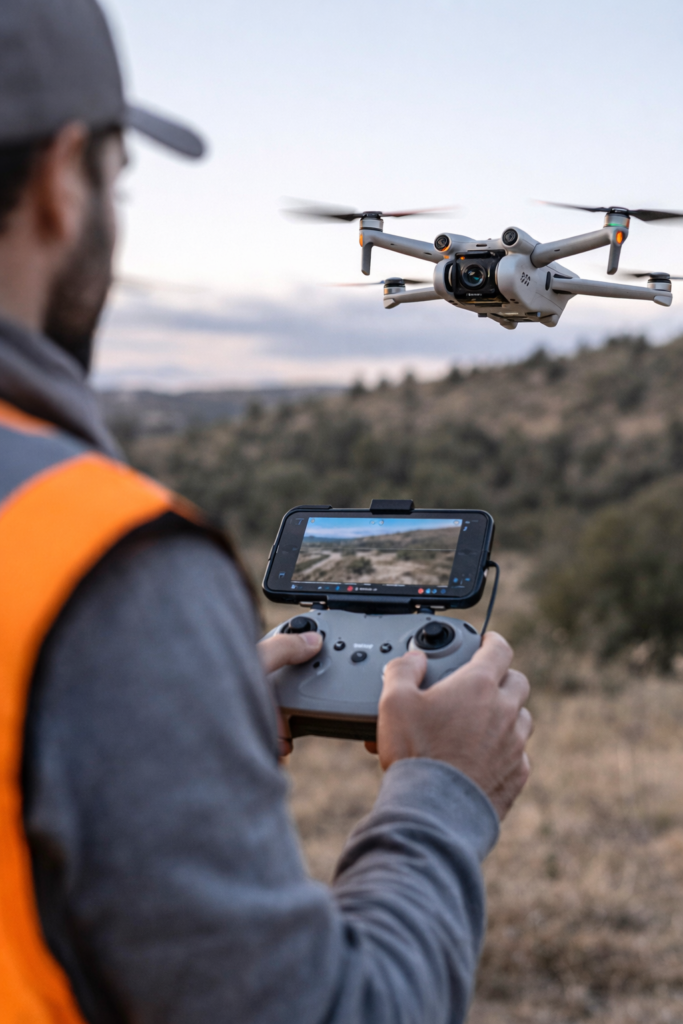
Tell me what drone you have and I will guide you on the option that best suits your use. If you also have questions about registration, open category or documentation, we will review it with you before quoting.
GENERALI DRONE INSURANCE
Recreational drone insurance in Spain: protect your liability against damage to third parties
This solution is designed to cover civil liability arising from personal injury, material damages and consequential damages caused involuntarily to third parties for the private and recreational use of the drone and recreational use of the drone identified in the policy, always within the applicable legal framework.
If during a covered recreational flight damage is caused to a person or property of third parties, the policy may be liable within the contracted limits.
It also covers economic losses that are a direct consequence of a covered personal injury or property damage. or property damage covered.
When a claim comes in, the problem is not always only the damage. There is also the legal side. That's why this solution includes defence against covered claims, payment of ancillary costs within the terms and conditions and the provision of legal bonds.
The company assumes the management of the legal defence in covered claims, even when they are unfounded. unfounded.
Civil bonds are included as well as criminal bonds, within the applicable policy limits. of the policy.
The specific policy covers flying in places and in a manner permitted by the regulations, assembly, maintenance and cleaning of the drone, damage due to direct contact or accidental detachment of components, FPV use with observer and VLOS, and certain cases where cohabiting family members can act as insured parties if they meet legal as insured parties if they meet the legal requirements.
The use of first person vision is permitted provided that there is a ground observer and the required visual control is maintained. and the required visual control is maintained.
The liability of the observer and subsidiary liability may also apply in specific cases foreseen in the policy. cases foreseen in the policy.
This particular policy is not intended as a generic professional drone insurance. It expressly excludes commercial, commercial or professional uses; specific or certified operations; autonomous flights or flights without visual control; transport of goods; certain areas or heights outside the norm; official competitions; damage to the drone itself; and claims arising from images, photos or audios.
If you use the drone for work, income, services or commercial activity, this text should not be sold as a closed solution for that as if it were the closed solution for that case.
The CR protects against third parties; it is not a cover for the device's own damage in this particular policy.
To guide you properly I need to know what drone you have, how you use it and if your operation really fits with an open category recreational scheme. with a recreational scheme in open category. With this information I can then tell you if this option makes sense or if you should or if you should consider another way.
In general terms, drone liability insurance is designed to cover personal injury, property damage and economic loss as a direct consequence of such damage, provided that it is caused unintentionally to third parties and within the use or activity declared in the policy. Simply put: it protects against third party claims, not against any conceivable problem.
Personal damage is injury or death caused to persons. Property damage is damage to or destruction of things, including damage to animals. And consequential damages are economic losses that derive directly from a covered personal or material damage. That is to say, not every economic loss is covered: normally it must be accompanied by a basic damage covered by the policy.
Yes, in general, this type of liability insurance covers not only the possible indemnity, but also the defence of the insured against covered claims, even if they are later proven to be unfounded. In addition, it can include costs, legal or extrajudicial expenses and other ancillary costs within the agreed limits.
Usually yes. The general conditions contemplate the constitution of the judicial bonds required of the insured person to guarantee his civil liability. And in some particular conditions, the inclusion of bonds in criminal cases can also be included, always within the contracted limits.
This depends on the sum insured in the particular conditions. The general conditions make it clear that the company is never liable for more than the limit per claim stated in the policy. As a real example, a recreational drone policy may have a limit per claim of €600,000 and a sub-limit per victim of €300,000, but that is an example: each policy may be different.
The excess is the part of the claim that is assumed directly by the insured. If the policy includes it, this amount is deducted from the total amount of indemnities, bonds and ancillary costs. For example, there may be a fixed excess per claim, as occurs in some of the particular conditions analysed, but it does not always have to be the same.
Not necessarily. In liability insurance, the risk covered depends on how the activity is declared in the policy. If the policy is intended for recreational use, it is not appropriate to sell it as if it automatically covers professional, commercial or mercantile work. In some example conditions, professional use is expressly excluded.
It can be accommodated, but not in any way. As an example of how particulars can be drafted, the use of FPV can be envisaged as long as there is a ground observer and the visual control required to operate safely is maintained. This should not be presented as a universal rule, but it is a good example of how coverage can be conditional on the mode of flight.
It may go beyond the exact moment of flight. For example, particular conditions may also include assembly, maintenance or cleaning of the drone, and damage caused by direct contact of the device or accidental detachment of any of its components.
This depends on the wording of the policy. In some examples of particular conditions, in addition to the policy holder, certain cohabiting family members can be considered as insured persons, provided that they fulfil the legal requirements of age, education or registration.
Here it is important to be clear: in addition to general liability insurance exclusions, specific exclusions may exclude, for example, commercial or professional use, specific or certified operations, flight without visual control from the ground, transport of goods, official competitions, lack of maintenance in accordance with the manufacturer or damage to the drone itself. This is not meant to scare; it is to avoid misunderstandings.
Normally not, if we are talking about a liability policy. CR is designed to cover damage caused to third parties. Damage to the aircraft itself usually requires different coverage.
Claims arising from the capture, reproduction, dissemination or publication of photographs, images or audio are excluded.
Civil liability can be extended, depending on the policy, to own acts or omissions and also to those of persons for whom the insured is responsible. There may even be a subsidiary CR in specific cases, although this normally requires very specific conditions, such as the existence of a final judgement and the direct responsible party being declared insolvent.
This is more important than it seems. The contract is based on the declarations of the policyholder and the risk questionnaire. If the actual risk does not match the declared risk, the compensation could be reduced proportionally, and even bigger problems could arise if there is bad faith. Translated into the language of the street: better to state what the drone is used for than to try to “force” a cheaper policy.
It is most useful to provide name, contact details, drone model, intended use and any details that help to correctly identify the risk. The better the activity and type of operation is defined, the more accurate and safer the proposal will be. In CR insurance, accuracy in quoting is worth more than the rush to close.
Because in civil liability, the details are very important: who uses the drone, for what purpose, under what conditions and with what limits. The general conditions lay the groundwork, but it is the specific conditions that set the scope, sums insured, excesses and exclusions. The good insurance is not the one that “sounds good”, but the one that really fits the actual use of the drone.
The most sensible way is to first review your case: type of drone, recreational or professional use, type of flight and real needs. This avoids falling into the classic mistake of wanting to include a professional activity in a policy designed for something else. And that, in insurance, can be expensive... and not exactly in petrol.